Thomas Vaitses Fontanari

Thomas Vaitses Fontanari

PhD Student at Sapienza Università di Roma

About

I'm a PhD student in Data Science at Sapienza University of Rome, where I work under the supervision of Prof. Scardapane within the ISPAMM and SNAIL groups. My research interests include modular deep learning and interpretability of neural networks.

I hold a Bachelor of Engineering degree in Computer Engineering (2021) and a Master's degree in Computer Science (2023), both from UFRGS, in Brazil. From 2023 to 2025 I worked as a Data Scientist at Petrobras, in Rio de Janeiro.

Selected Publications

For a full list, check my Google Scholar.

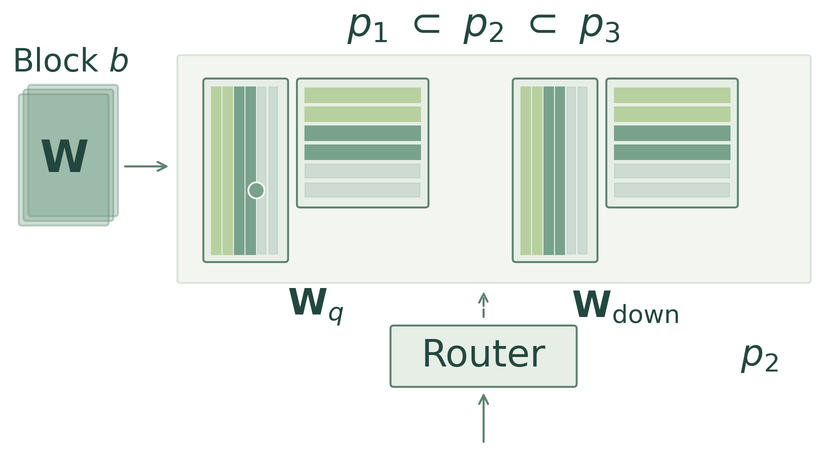
Animated LRCC overview: shared low-rank factors activate nested rank prefixes p1, p2 and p3, while a block-level router selects a different prefix for each token.

LRCC: Generalizing Low-Rank Compression with Conditional Computation

Short paper accepted to NeurIPS 2026 Workshop AXIOM
T. V. Fontanari, M. E. Rulli, F. Alvetreti, D. Genovese, S. Scardapane

We generalize low-rank compression of Transformers by conditioning the number of activated ranks on input activations using lightweight block-level routers.
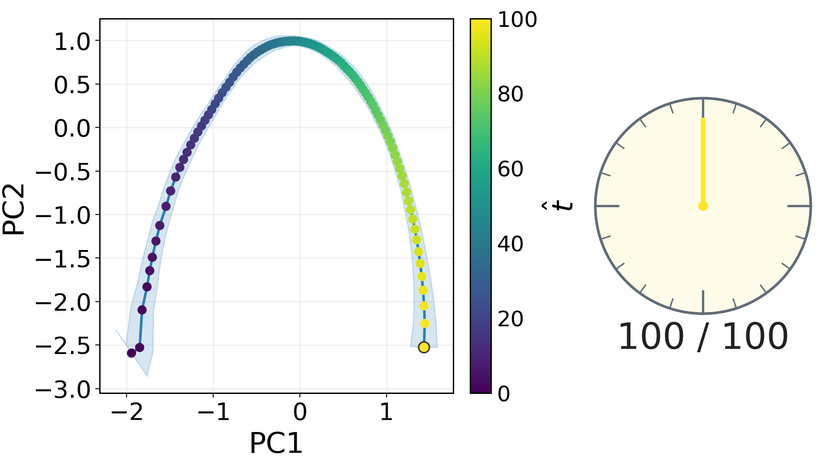
PCA trajectory revealed as an analog clock advances through denoising progress from 0 to 100.

Subliminal Clocks: Latent Time Modelling in Diffusion Language Models

arXiv preprint, 2026 (accepted to EMNLP 2026)
M. E. Rulli, T. V. Fontanari*, S. Petruzzi*, F. Alvetreti, G. Strano, D. Crisostomi, G. Nikolaou, T. Mencattini, A. Santilli, E. Rodolà, S. Scardapane, A. Devoto

A mechanistic interpretability study identifying and causally validating latent representations of the denoising timestep in masked diffusion language models.

* Equal contribution.

Previous Research

Before starting my PhD, I also conducted research on digital circuits, video and signal processing, graph neural networks, and bioinformatics.

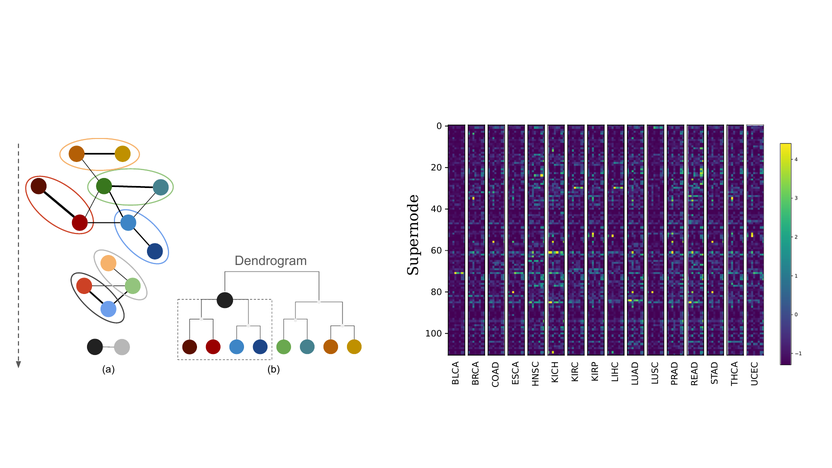
Graph coarsening and dendrogram from Figure 2 beside the supernode embedding heatmap from Figure 5(a).

Hierarchical Pooling and Explainability in Graph Neural Networks for Tumor and Tissue-of-Origin Classification Using RNA-seq Data

arXiv preprint, 2026
T. V. Fontanari, M. Recamonde-Mendoza
Work completed in 2023 as part of my master's dissertation.
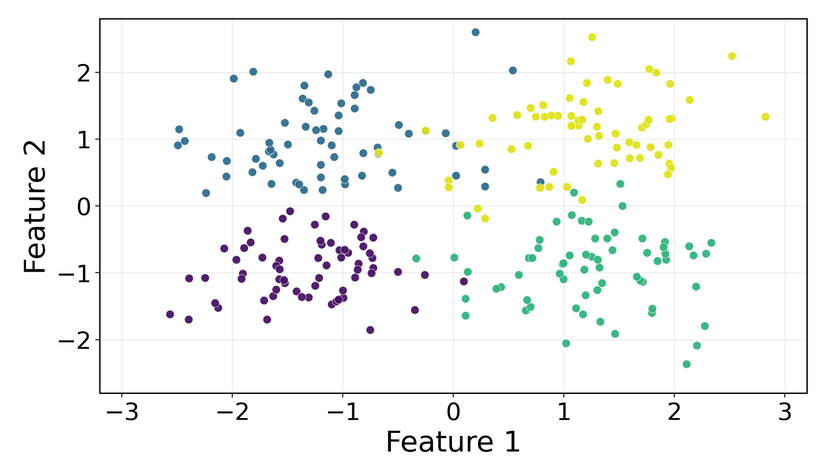
Illustrative scatter plot of synthetic points in four colored groups.

Cross-validation Strategies for Balanced and Imbalanced Datasets

Brazilian Conference on Intelligent Systems (BRACIS), 2022
T. V. Fontanari, T. C. Froes, M. Recamonde-Mendoza
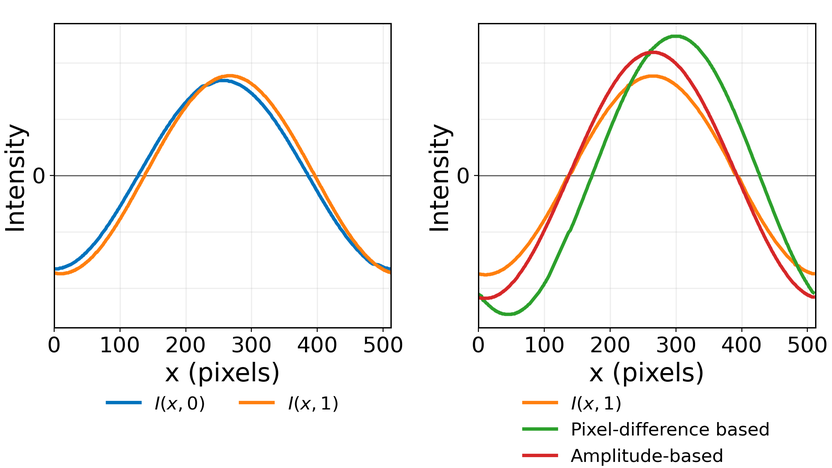
Original and shifted signals from Figure 4(a), beside amplitude-based and pixel-difference-based magnification from Figure 4(c).

Simultaneous magnification of subtle motions and color variations in videos using Riesz pyramids

Computers & Graphics, 2021
T. V. Fontanari, M. M. Oliveira
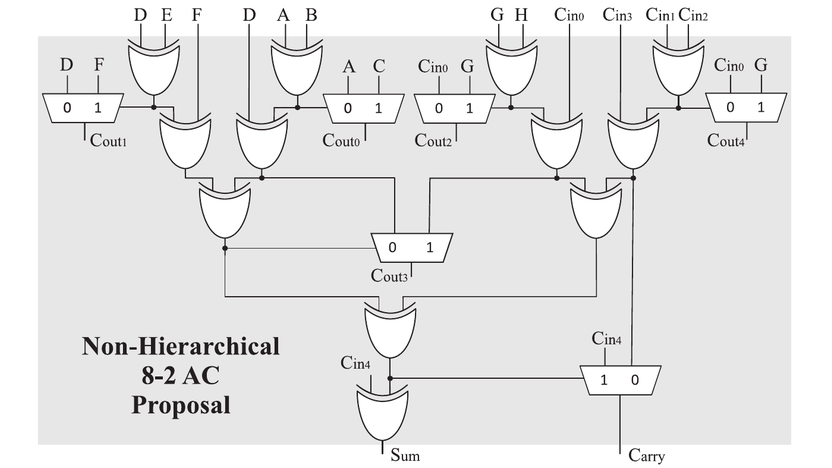
Figure 3: proposed non-hierarchical 1-bit 8-2 adder compressor logic circuit, with XOR gates, multiplexers and carry signals.

An Efficient N-bit 8-2 Adder Compressor with a Constant Internal Carry Propagation Delay

Latin American Symposium on Circuits and Systems (LASCAS), 2020
T. V. Fontanari, G. Paim, L. M. G. Rocha, P. Ucker, E. A. C. da Costa, S. Bampi
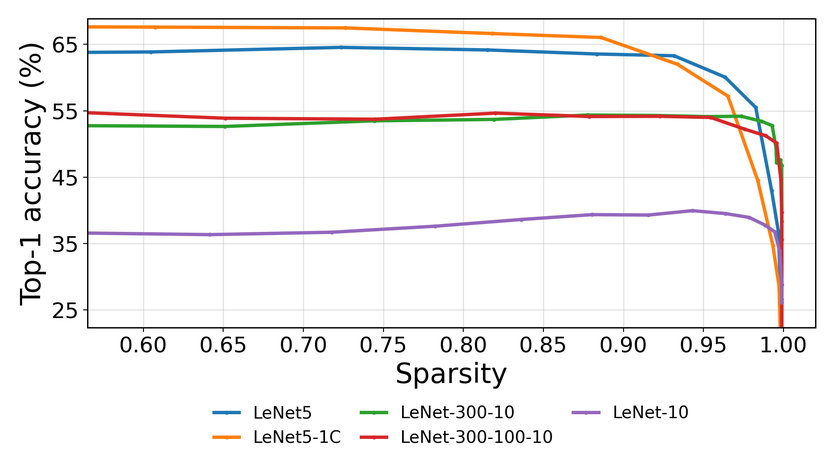
Figure 8: CIFAR10 top-1 accuracy versus sparsity for five LeNet architectures, showing the accuracy drop at extreme sparsity.

Investigating the Impact of Pruning on Energy-Accuracy of Neural Networks

ICCEEg, 2020
T. V. Fontanari, L. M. G. Rocha, G. M. Santana, G. Paim, E. A. C. da Costa, S. Bampi
Selected for publication as one of the best undergraduate-level works presented at SIM